There are stars, and then there are constellations that guide generations. Dharmendra belonged to the latter. Calling his passing the end of an era is not a phrase used lightly. It is a truth that echoes across the history of Indian cinema. For more than six decades, he stood as one of the brightest lights in the sky of Hindi films, shaping stories, shaping memories, and shaping the very idea of what a hero could be. Dharmendra was not born into the world of cinema. He came into it with quiet dreams and an almost stubborn determination. Born Dharam Singh Deol in Punjab, he grew up far from the glamour he would one day come to define. His early years were spent in a simple, disciplined environment where work was respected and emotions were held with dignity. Before the screens lit up with his charm, he worked in an oil refinery, doing a job that demanded strength of body and spirit. His journey began not with fame but with perseverance.
What is extraordinary is how his dream first took shape. Dharmendra entered a Filmfare talent contest in the late nineteen fifties. He was a young man with nothing but hope, and that small chance opened the doors of Bombay’s film world. His full name was Dharam Singh Deol, a name rooted in simplicity and heritage. Though cinema later crowned him as Dharmendra, the dignity and warmth of his birth name always followed him through life. But even after arriving, nothing was handed to him. He struggled, waited outside studios, rehearsed endlessly, and watched others get opportunities before him. Yet he stayed. That is the part of Dharmendra people sometimes forget. His stardom was not accidental. It was earned with patience. His breakthrough came slowly and then all at once. Films like Anpadh, Bandini, and Haqeeqat showed a soft spoken intensity that set him apart. But it was Phool Aur Patthar that made the country sit up and look at him with awe. His powerful screen presence and emotional depth created a new kind of masculinity, one that could be strong without cruelty, gentle without weakness. The image of Dharmendra lifting the unconscious Meena Kumari in his arms became iconic, the sort of moment that stays alive in cinema forever. From then on, his career unfolded like a festival of unforgettable performances. In Sholay, he became the charismatic Veeru, a role that remains etched in the collective memory of India. Even today people smile while recalling him saying, “Basanti, in kutton ke saamne mat nachna.” In Satyakam, he delivered a performance so profound that critics still consider it one of the greatest in Hindi film history. Chupke Chupke showcased his flawless comic timing, while Jugnu, Yaadon Ki Baaraat, Raja Jani, Dream Girl, and countless others proved that he was not defined by one genre or one emotion. He could be heroic, romantic, mischievous, tragic, and noble, sometimes all in the same film. For almost ten years before his passing, Dharmendra had stepped away from the constant rhythm of filmmaking. Age, health, and a desire for quiet living kept him away from the larger cinematic world he once ruled. Yet even in this period of absence, his presence was never forgotten. His old films continued to air on television, his interviews resurfaced online, and fans kept celebrating his charm, warmth, and gentle humour. Though he was no longer in front of the camera, his influence remained steady, proving that true legends do not fade with time. They simply rest while their legacy continues to shine. Beyond the screen, Dharmendra carried a grace that made him beloved. He never lost the warmth of the boy from Punjab. His personal life was marked with both love and complexity, yet he always protected his family from noise and spectacle. His marriage with Prakash Kaur, and later with Hema Malini, created a life full of emotion, companionship, and sometimes struggle, but always held together by sincerity. As a father, he nurtured two generations of actors, guiding Sunny, Bobby, Esha, Ahana, Karan, and Rajveer with the kind of wisdom only someone who has lived several lifetimes on and off screen can offer. What also makes Dharmendra extraordinary is the affection he received from his colleagues. Fans called him the He Man of Bollywood, but those who knew him personally often described him as one of the most gentle souls in the industry. His kindness, his humour, and his openness created friendships that lasted decades. He taught the industry that strength does not lie in the body alone. It lies in the heart. As the news of his passing spread, India felt a quiet ache. It was not just the loss of an actor. It was the fading of a voice that had been part of the soundtrack of generations. Dharmendra represented a golden chapter of cinema, one in which stories were told with honesty and emotions were allowed to linger. His departure feels like the closing of a beautiful book, one that people will return to again and again. The song “Agar Tum Bhulana Doge,” chosen here as the subtitle, captures something essential about him. It reflects longing, memory, and the fear of fading away. Yet Dharmendra is not someone India will ever forget. His films live on. His dialogues still make people smile. His presence continues to glow on screen with the brightness of a star that refuses to dim. As audiences look back at his body of work, they realise that Dharmendra was not just part of Hindi cinema. He was part of their lives. And now, as one era ends, his legacy begins a new one, not in theatres but in the hearts of those who grew up watching him. The curtain may have fallen, but the applause will never stop.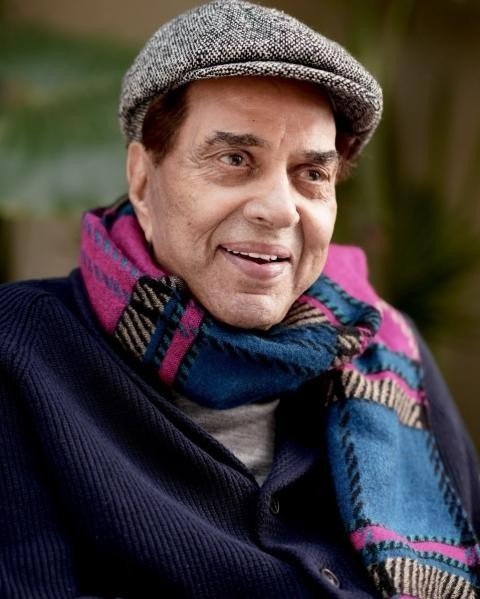
Positive Thoughts & Views