When one thinks of India’s independence movement, names like Mahatma Gandhi, Subhas Chandra Bose, and Bhagat Singh rightfully come to mind. But amid the roar of marches, speeches, and satyagrahas, another quieter revolution was unfolding — on the silver screen. While the term Bollywood wasn’t coined until decades later, the Hindi film industry, even in its embryonic stage, played a subtle yet profound role in shaping national consciousness, inspiring rebellion, and uniting a culturally fragmented country under one emotive banner: cinema. This is the forgotten story of how films, filmmakers, and freedom intertwined. Cinema Before Independence: The Silent Language of Resistance The first Indian feature film, Raja Harishchandra, was released in 1913 by Dadasaheb Phalke — a visionary who saw cinema not just as entertainment, but as a tool of cultural assertion. At a time when British films flooded Indian theatres and promoted Western ideals, Phalke’s mythologicals reconnected Indians with their epics, heritage, and identity. Watching a character like Harishchandra — a righteous king who never lies — wasn’t just a moral lesson; it was a reminder of Indian dharma, pride, and agency. Even when films weren’t overtly political, they carried subtextual resistance. Colonial censors were ever watchful, so filmmakers learned to speak in metaphors. A mythological battle could symbolise the fight against oppression. A courtesan’s dance could mirror the trapped voice of a colonised nation. This layered storytelling became cinema’s secret weapon. The Sound of Revolution: From Talkies to Tides of Change With Alam Ara in 1931, Indian cinema found its voice — literally. Sound films brought music, lyrics, and dialogue into the national consciousness. Freedom songs and poetic metaphors now reached beyond pamphlets and protest sites — into homes, hearts, and even villages. Films like Achhut Kanya (1936) tackled caste and social justice, tying into the broader Gandhian vision of an egalitarian India. V. Shantaram’s Dr. Kotnis Ki Amar Kahani (1946) portrayed Indian medical aid to China during their war with Japan, subtly underlining anti-colonial solidarity in Asia. During these years, filmmakers became philosophers, storytellers, and subtle revolutionaries. Their art held a mirror to colonial exploitation without naming names. They camouflaged political messages in music, romance, tragedy, and triumph. Bollywood’s Nationalist Spirits: The Men Behind the Movies Several industry pioneers were deeply involved in the national movement. K. Subrahmanyam in the South, and V. Shantaram and Mehboob Khan in the Hindi-speaking belt, used cinema to craft narratives of resistance. Their stories championed the poor, exposed exploitation, and asked uncomfortable questions about power. Prithviraj Kapoor, one of the earliest stars of Indian cinema, was a vocal supporter of the independence struggle. Through Prithvi Theatres, his traveling drama company, he spread nationalist messages across the country. His son, Raj Kapoor, would later become the face of post-independence optimism — but the roots were sown in a home that believed art should serve the nation. Similarly, music composer Vande Mataram Srinivasa Iyengar — known for composing patriotic songs — was an underground hero. His melodies, banned by the British, still found their way into local theatres, whispering rebellion into the ears of everyday Indians. Songs as Slogans: When Melodies Moved Mountains Even when political speeches were banned or censored, songs could pass through. Composers and lyricists took full advantage.
The song “Door Hato Ae Duniya Walon” (from *Kismet*, 1943) is a classic example. On the surface, it warned “foreigners” to stay away during wartime, supposedly referencing Germany and Japan. But Indian audiences read between the lines — it was a thinly veiled call for the British to quit India. Remarkably, the song was passed by censors and became an instant anthem. The power of music to stir patriotic feelings — cloaked in allegory — made films like *Shaheed* (1948, based on Bhagat Singh) possible. Though made just after independence, it captured the spirit of the time and was deeply rooted in stories that filmmakers had long yearned to tell but were held back by colonial scrutiny. Cinema Halls: The New Public Sphere Unlike elite meetings in clubs or political speeches in English, cinema was democratic. It spoke every Indian language. It played in small towns and big cities. Cinema halls became shared spaces where people across caste, class, and creed gathered, cried, and cheered together. This unity — so rare in colonised India — was politically potent. Watching a film was not just a pastime; it became a bonding ritual. It helped people imagine a united India, where a farmer from Bihar, a student from Bombay, and a factory worker from Calcutta could share dreams and emotions. In a deeply divided society, films gave Indians something invaluable: shared feeling, shared purpose, shared hope. British Censorship and the Clever Subversion Naturally, the British weren’t blind to cinema’s power. The Indian Cinematograph Act of 1918 gave them sweeping control over what was shown. Yet, filmmakers responded not with silence, but with ingenuity. They turned to allegory, symbolism, and emotion to bypass censors. A king losing his kingdom could symbolise India’s colonisation. A tragic romance between people of different classes echoed India’s broken society. Stories set in ancient times or foreign lands cleverly reflected the present condition of the colonised masses. This ability to say what couldn’t be said made cinema a sly but steadfast comrade in the fight for freedom. The Impact Beyond India Interestingly, early Indian cinema’s influence wasn’t confined to Indian borders. Films and freedom songs reached Indian diasporas in Burma, Africa, and Southeast Asia — many of whom were part of the broader anti-colonial movements. The screen became a thread connecting scattered sons and daughters of the soil to the heartbeat of the motherland. After Azadi: Cinema Continues the Dream Post-1947, Bollywood took on the role of rebuilding the national psyche. Films like *Mother India* (1957), *Naya Daur* (1957), and *Do Bigha Zamin* (1953) weren’t just blockbusters — they were extensions of the freedom struggle, capturing the pain of Partition, the aspirations of farmers, and the dawn of industrialisation. But these roots of nationalism and sacrifice were not new — they had been planted long ago, during the silent, unseen contributions of pre-1947 cinema. Final Cut: A Legacy Uncredited Today, when we speak of India’s freedom, Bollywood’s name rarely comes up. But behind every banner of protest was a song, a scene, a storyline that touched hearts and emboldened minds. The Hindi film industry — then young, often impoverished, and yet fiercely creative — served as an underground network of emotional mobilisation. It dared to speak when speech was dangerous. It dared to dream when reality was grim. It dared to show India not as it was — but as it could be. In that, it played a quiet yet unforgettable role in scripting the story of Indian independence.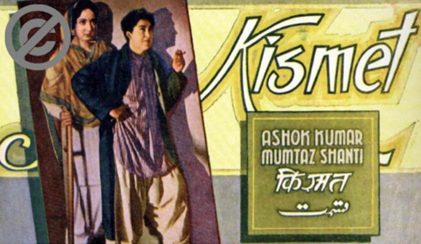
Positive Thoughts & Views